
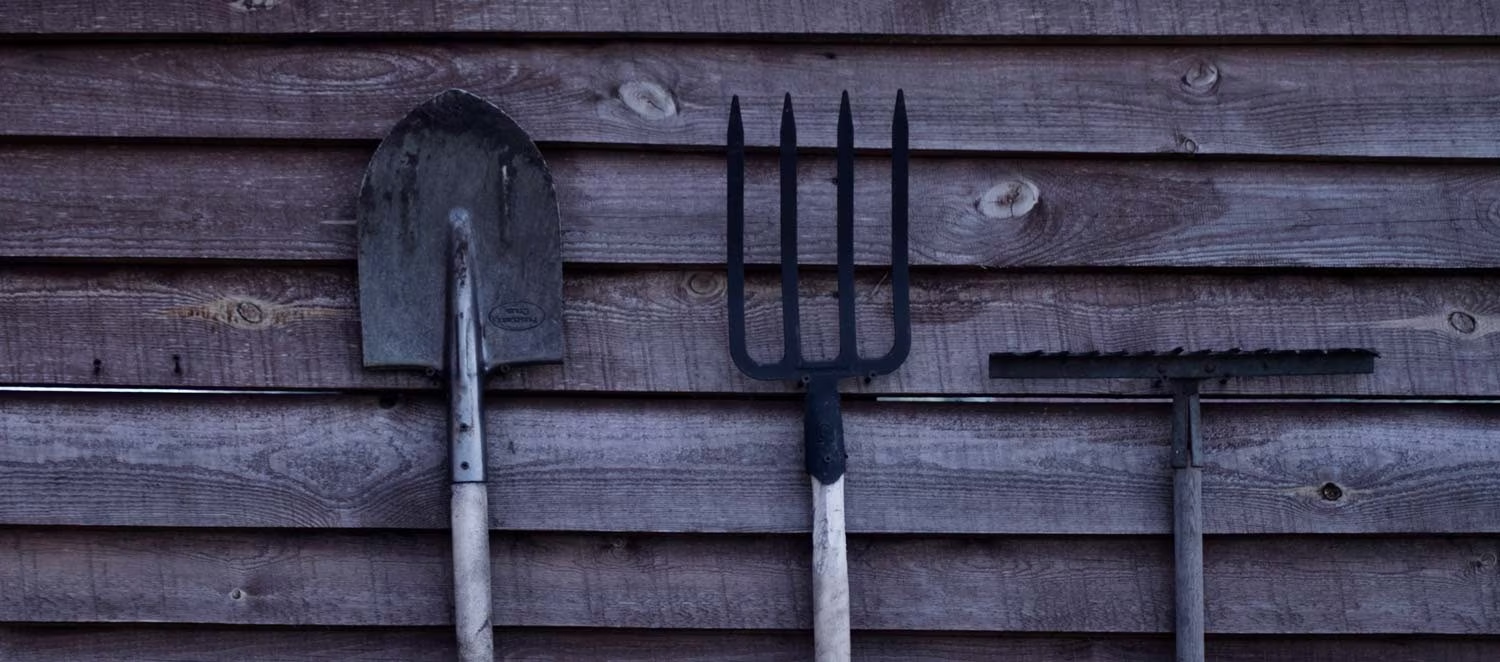
Give your rusty tools a new lease of life
How to clean your rusty tools

What is rust?
Rust is iron oxide, and it forms when oxygen and iron (or the iron in steel) react together to corrode the metal. The oxygen in the air does not typically react with iron – rust usually forms when water is involved. This is particularly true of water that has impurities, which is why rust forms more quickly in salty seawater than in rainwater. However, continued exposure to humidity or water vapor can be enough to cause rust over time so we often see this on ferrous metals (those that contain iron) that are used or left outdoors.
How to remove rust
Method 1: Elbow grease (with wire wool and sanding)
-
Wash the tool with a soap such as washing-up liquid, wiping away any dirt with a scourer. Dry off.
-
With steel wool (or a stiff wire brush), clean the rustiest areas first to get as much off as possible.
-
Then use coarse sandpaper to further reduce the rust on the surface of the metal.
-
If you need to, switch to a finer grain sandpaper to work on any remaining spots of rust.
-
Rinse and thoroughly dry the metal. Spray a little WD40 and wipe over with a paper towel to remove any remaining moisture and prepare for use.
Method 2: Domestic chemistry I: Vinegar and salt
Vinegar and salt works best for tools with a large amount of rust. It’s good for areas of rust that are difficult to get at with abrasives. You do need quite a lot of vinegar and salt for this method, especially if you are cleaning large tools, but you can buy both quite cheaply in large amounts in supermarkets.
-
Wash the tool with a soap such as washing-up liquid, wiping away any dirt with a scourer. Dry off.
-
Place the tool in a container large enough to fit the entire metal part of the tool.
-
Use 250g of salt per litre of white vinegar. Pour enough vinegar into the container to cover the metal. Sprinkle the corresponding amount of salt (using the above ratio) evenly over the surface.
-
Tools that are too large to fit in a container can be wrapped in a cloth soaked with vinegar and sprinkled with salt and then put in a plastic bag.
-
The mixture of vinegar and salt can take up to 72 hours to break down lots of rust, so ensure you do this where you can leave it to work for a few days.
-
Check the tool periodically for loosening rust – once it’s looking soft, use a metal brush or steel wool to scrub off the surface. If more rust remains, continue to soak in the mixture.
-
Once you have removed the rust, rinse and thoroughly dry the metal. Spray a little WD40 and wipe over with a paper towel to remove any remaining moisture and prepare for use.
Method 3: Baking Soda
Sodium bicarbonate, also known as Baking Soda, works well for small areas of rust or rust stains.
-
Wash the tool with a soap such as washing-up liquid, wiping away any dirt with a scourer. Dry off.
-
Pour baking soda in a small bowl. Add enough water to make a paste. A 1:1 ratio of baking soda to water (by volume) makes a good paste.
-
Apply the paste to the rusted area.
-
Let it sit for a couple of hours.
-
Use a brush to scrub off the paste.
-
Rinse and thoroughly dry the metal. Spray a little WD40 and wipe over with a paper towel to remove any remaining moisture and prepare for use.
Preventing rust once you have clean tools
Rust can be prevented by not allowing water or moisture to stay in contact with metal surfaces. You can do this by thoroughly cleaning and drying tools after each use and by applying a protective coating onto the metal. As mentioned above, we recommend using a small amount of WD40 or a thin, multi-use oil, and wiping over the surface, removing any excess.
If you have rusty tools in your garden shed, why not give these cleaning tips a go. It could give you several more years of use! Let us know how you get on.